
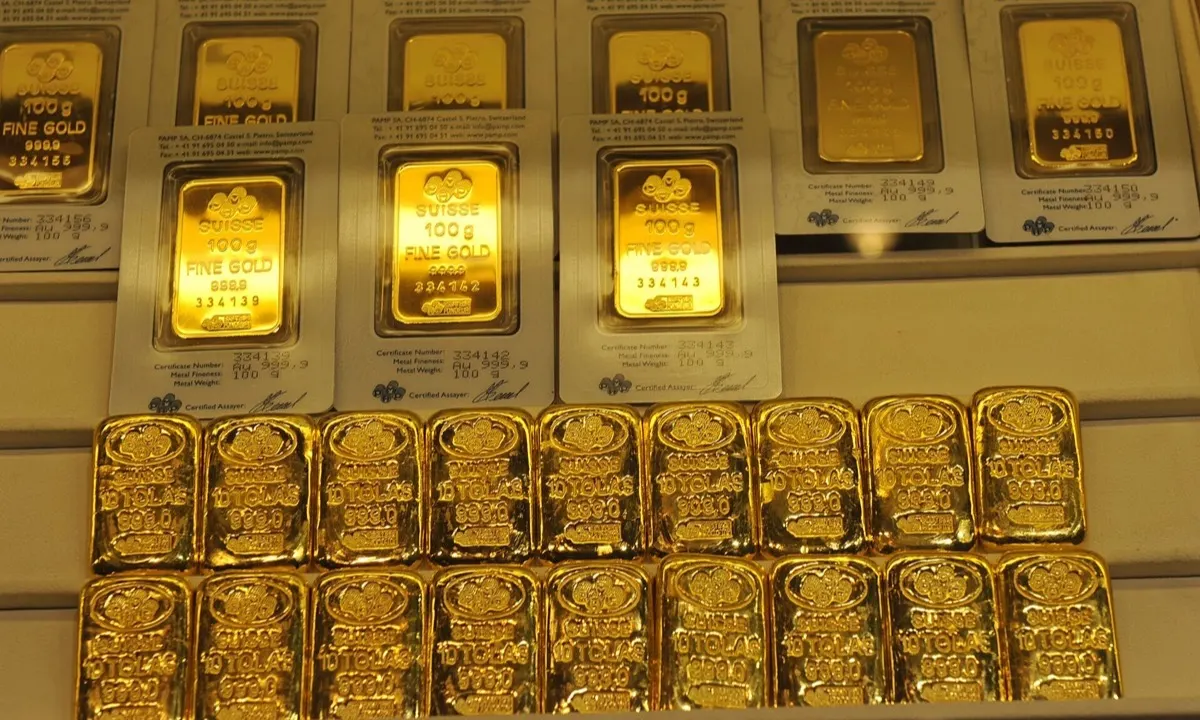
Dubai sells gold in every costume: bangles, biscuits, minted bars, milled coins. The metal inside is identical; the costs wrapped around it are not, and those wrappers, premium in, spread out, storage in between, are the entire difference between owning gold and owning gold efficiently.
The efficiency ladder
Large minted bars sit at the top: premiums of a low single-digit percent over spot, and buy-back spreads of 1 to 2% at any bullion desk. Small bars and coins pay a step more per gram for divisibility, you can sell a tenth of a stack, not a tenth of a kilo bar. Plain heavy jewellery (bangles, chains) carries negotiated making charges of a few percent that resale never returns. Intricate and branded jewellery sits at the bottom as an investment, its design premium is consumption, not asset. Nothing wrong with buying beauty; just book it as beauty.
What the UAE uniquely offers
Three structural advantages. Tax: investment-grade bullion is zero-rated for VAT, and the UAE levies no personal capital gains tax; jewellery carries 5% VAT that tourists mostly reclaim. Liquidity: the souk's bullion desks quote two-way prices off the live rate all day; a certified bar converts to dirhams in minutes. Integrity: recognised-refiner bars come sealed with assay certificates, and the emirate's inspection regime keeps stamps honest at licensed counters, use the directory to stay inside that regime.
Bars: buying them right
Buy sealed, certificated, recognised-refiner bars, nothing hand-poured, nothing loose. Sizes from 10 g to 100 g suit most private stacks: the 100 g bar minimises premium, a spread of 10 g and 50 g pieces preserves the option to liquidate in slices. Pay traceably, file the invoice with the certificate, and leave the seal unbroken forever, an opened assay card costs you the tight spread at resale.
Coins: the middle path with a collector's tail
Sovereigns, Eagles, Maples and the like trade close to bullion desks' bar spreads with two bonuses: global recognisability (any dealer on earth knows a Britannia) and, occasionally, a numismatic premium that grows. The cost is a slightly higher premium per gram than bars. For gold intended to travel or to be gifted in units, coins are the practical answer.
Jewellery: the store of value you wear
A plain 22K bangle bought at a hard-negotiated making charge is a legitimate savings vehicle, families across the Gulf and South Asia have used it for generations, precisely because it recovers its full metal value at any counter (the resale guide). The rule that keeps it honest: minimise the non-metal share. Plain and heavy over intricate and light; negotiated labour over branded margin; 22K over stone-set 18K, stones resell at a fraction of what directory">jewellers charge for them.
Storage, the forgotten line
A stack worth six figures belongs in a bank safe-deposit box (modest annual fee at UAE banks) or a home safe that your insurer actually recognises, check the policy's jewellery-and-bullion sub-limit before assuming cover. Storage cost is a drag on return; size it into the plan rather than discovering it after the fact.
The framework, by intent
Pure savings: bars, largest size you will never need to sell in part. Flexible savings: mixed small bars and coins. Cultural savings-plus-wearing: plain heavy 22K at negotiated labour. Adornment: whatever you love, priced with the calculator so you know exactly what share is metal and what share is joy. The stack and the jewellery box can coexist; the mistake is confusing their bookkeeping.