
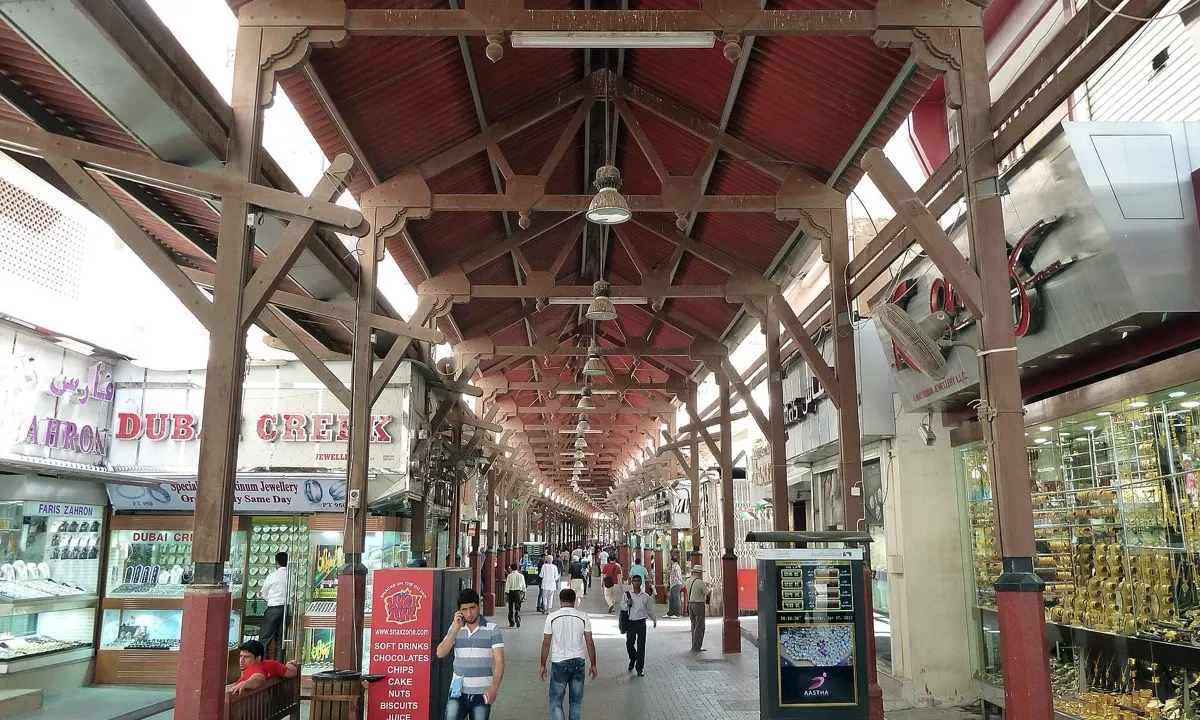
Nothing quite prepares a first-timer for the volume of it: window after window stacked floor to ceiling with bangles, sets and chains, whole kilograms glowing behind glass, under a carved timber roof that has watched a century of this trade. Here is the visit, walked through end to end, so the spectacle stays a pleasure and the buying stays sharp.
Orienting: what the souk is
The Gold Souk is a covered lattice of pedestrian lanes in Deira, old Dubai's trading quarter, holding several hundred licensed jewellery counters, from single-window family houses to the flagships of national chains, plus the bullion desks that sell bars and coins. The famous carved arch reading Dubai City of Gold marks the main entrance; the lanes fan out behind it, flat, shaded and compact, the whole historic core walks in fifteen minutes.
Getting there and when
The Green Line's Al Ras station puts you four minutes from the arch, the full route, exits and fares are in the metro guide, with the bus hub and abra alternatives in the bus guide. Hours run 10:00 to 22:00 with a common afternoon lull; Fridays wake after prayers. Go at 10:00 for quiet counters and unhurried talk, or after 18:00 for the full illuminated spectacle, first-timers who can manage it should see both.
Reading a window
The stacked displays are organised by karat and category: deep-yellow 22K bridal and traditional work, Gulf-favoured 21K, paler 18K contemporary and stone-set pieces (the differences are decoded in the karat guide). Price tags are rare, and that is not a trick: gold is sold by weight at a live rate plus a labour fee, so the "price" of a piece genuinely changes through the day. The windows show design and weight class; the number emerges at the counter.
The counter conversation, demystified
Step in, point, and the piece comes out, onto a stamped scale, weight displayed, karat named. Then comes the quote. From here the script is short and known: ask for the split (gold versus making charge), check the gold half against the live rate on your phone, and negotiate only the making half, the full choreography is in the negotiation playbook. Tea or karak may appear if the conversation gets serious; accepting it commits you to nothing but courtesy. Browsing without buying is entirely normal; so is visiting three counters for the same style of piece, the density is the buyer's weapon.
If you buy
Watch the weighing, keep the piece in sight to the bag, and leave with an itemised tax invoice: weight, karat, rate, making charge, VAT. Ask for the tax-free tag against your passport if you are a tourist, that is the airport VAT refund set up in thirty seconds. Card is accepted everywhere; cash sometimes earns a final percent. The verified directory is worth loading before you go, walking in with two or three shortlisted houses turns a maze into an itinerary.
Making a half-day of it
The Spice Souk begins two lanes west, all sacks and saffron; the perfume streets run between; and the creek-side abra station is five minutes south, where AED 1 buys the crossing to Bur Dubai's old quarter as the sun drops. Gold at 17:00, spices at 18:30, abra at sunset, dinner on the far bank: the classic old-Dubai evening, and the reason first visits so rarely stay only visits.


